
A Stunning Northern Lanzarote and La Graciosa Day Trip Itinerary
This website uses affiliate links which may earn a commission at no additional cost to you. As an Amazon Associate I earn from qualifying purchases.
Updated: 28th June 2026

Lanzarote is one of the most unique islands I’ve ever visited. Driving across it – even though it’s only 60 kilometres long – feels like crossing two different planets, let alone islands. Formed by the fusion of two volcanic landmasses over millions of years, and then made even more dramatic by volcanic eruptions in the 1700s (creating what is now the Timanfaya National Park), it’s truly a spectacle.
Understandably, the jet-black landscape of Timanfaya – speckled with bodegas and verdant vines that unbelievably grow from the ash – and the sandy beach of Playa Blanca, make the island’s south a tourism draw. But my favourite day trip was exploring northern Lanzarote and the neighbouring island of La Graciosa.
Driving away from the otherworldly Timanfaya, the scenes shift to a more dramatic and rugged landscape, where palms and agriculture terraces cling to mountain sides and the Risco de Famara, a near-vertical massif that stretches as far as the eye can see and climbs to 670 meters, dominates. At the end of it all? A ferry will whisk you to arguably one of Europe’s best beaches, just over the “Rio” on La Graciosa. Here’s how to see the best of northern Lanzarote in one day.
Morning in Northern Lanzarote
Firstly, start early. You’ll want at least three hours on La Graciosa, so leave enough time to arrive before midday.
A César Manrique Introduction
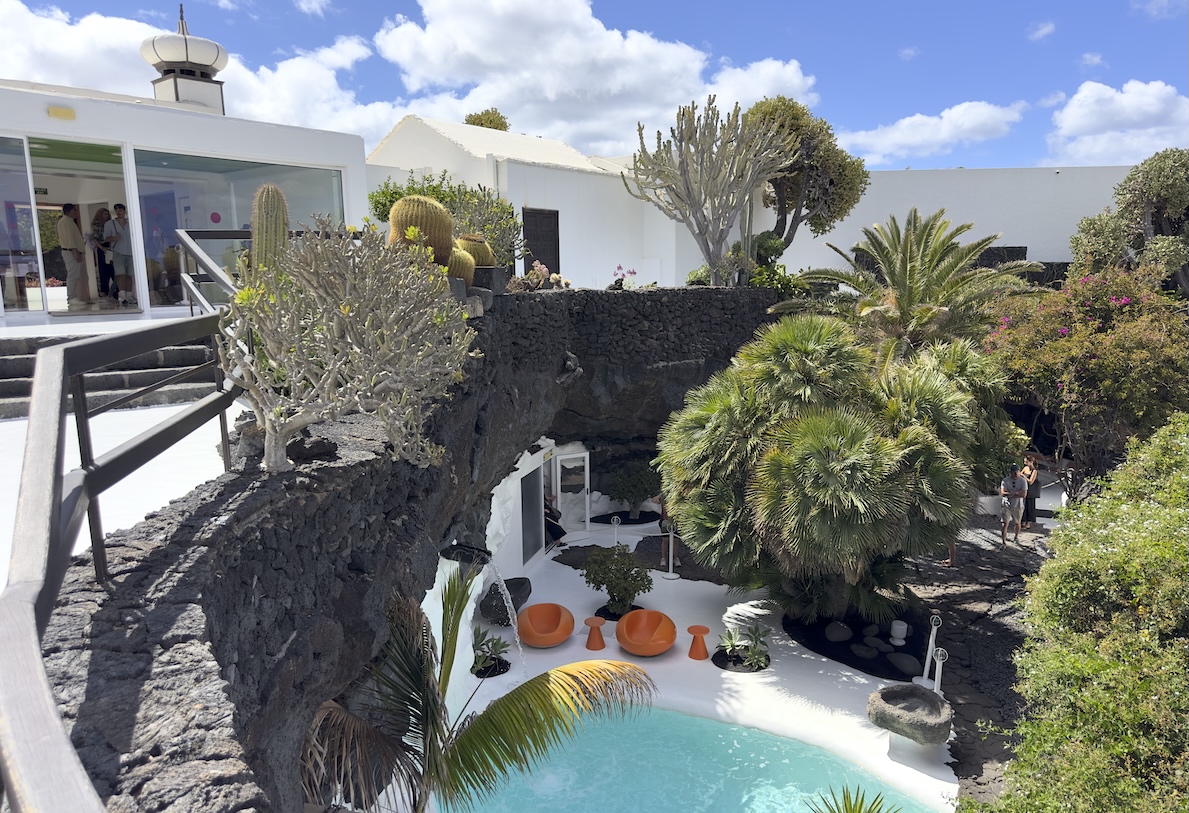
From the capital of Arrecife, head inland towards Teguise. On the way, you’re going to encounter some of the works and locations best linked to the artist who did manage to somewhat tame Lanzarote’s landscapes: César Manrique. Born here in 1919, he began his career as a painter, but his greatest mark on the island is the architecture he designed upon his return home.
You could easily spend a full day visiting the most famous locations he designed, but with time tight, I’d suggest skipping the Fundación César Manrique – a museum and his former home – and making it a full-morning visit another day. Instead, head straight into the northern landscapes, where greenery returns, and the village of Teguise.
Whitewashed Villages & Towns
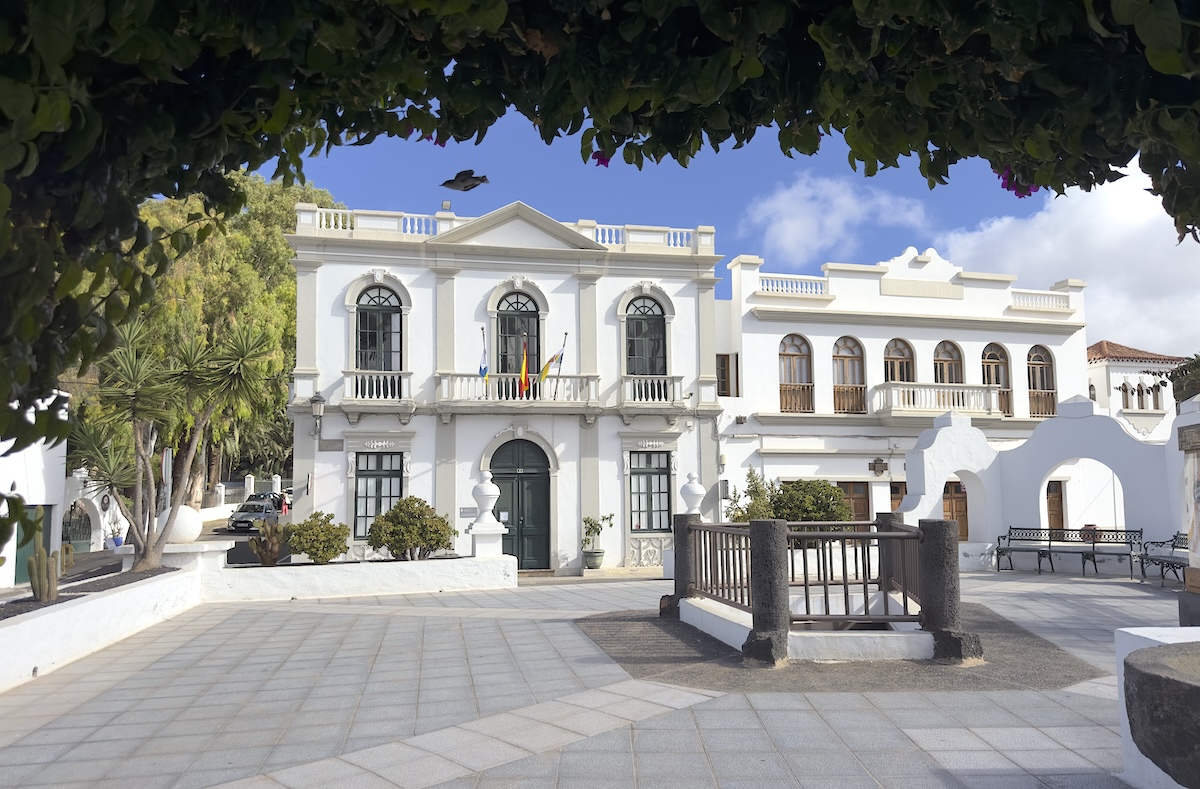
Teguise, the island’s former capital, is officially one of Spain’s most beautiful towns. Stop for a wander and coffee before taking the mountain roads onwards to Haria. There’s a handful of excellent miradors (viewpoints), a slight detour on the route, all with elevated panoramic views from the Risco de Farma, looking down at the near-vertical drop and across the flat lands that seemingly flow into the Atlantic from atop Peñas del Chache, Lanzarote’s highest mountain. But perhaps the best miradouro, another César Manrique brainchild, comes later.
After zigzagging down a sometimes alarming road with epic views, you’ll reach Haría, set in the so-called “valley of a thousand palm trees”. It’s another cute village worth a wonder. You won’t need more than 20 minutes to appreciate the whitewashed streets and main square, underneath which the old water tank is now an art gallery. César Manrique spent his final years here, and his home is now a museum of sorts.
Mirador del Río
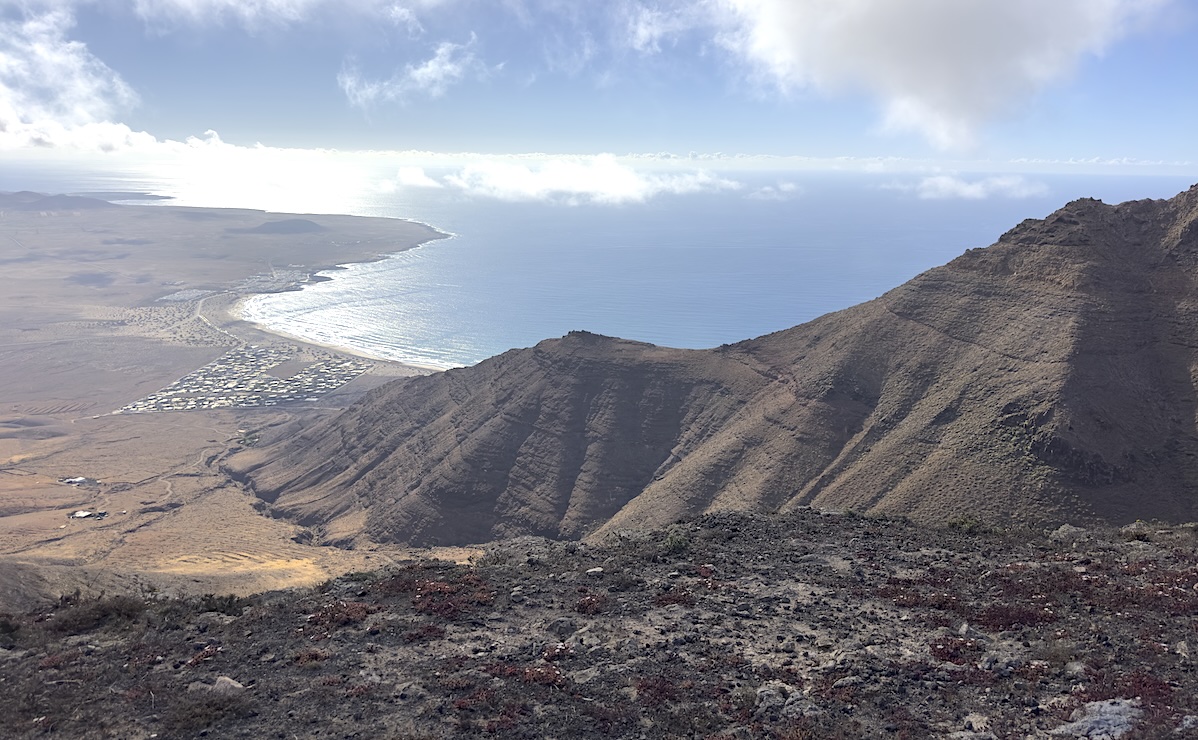
Ascending again, though a mishmash landscape of palms and agriculture, volcano domes and hamlets, the road leads to the Risco do Famara’s highest points and Mirador del Río, a César Manrique-designed panoramic viewpoint where you’ll enjoy a sweeping panorama of La Graciosa and the Chinijo Archipelago and Lanzarote’s wind surfing beaches below.
Just don’t make my mistake of thinking “that would be a great sunset spot”. Unlike many of the other miradors, where you can drive up and enjoy the views any time, Mirador del Río closes before 5pm. So, head here before taking the ferry.
Midday in Órzola
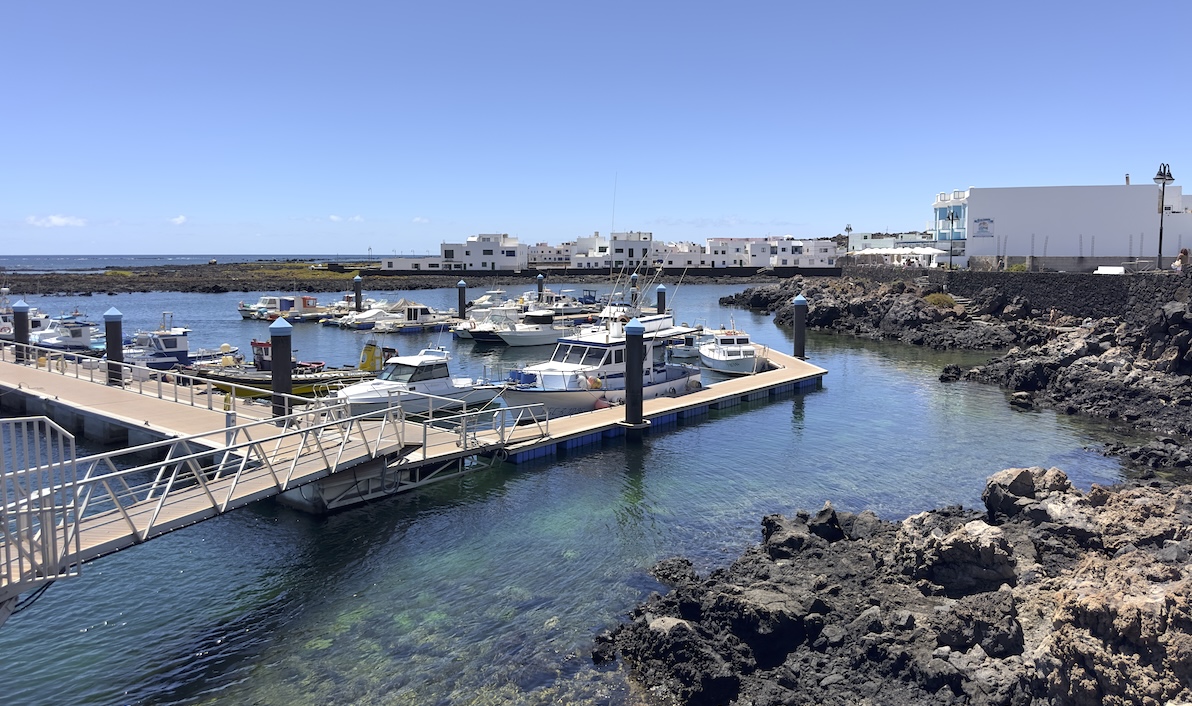
Aim to arrive in Órzola, a laid-back and low-key port town in the island’s north, around midday. This will give you time to park up (no cars are allowed on La Graciosa) and enjoy lunch. Parking is free for ferry passengers, so follow the signs (someone is usually on hand to direct you) to the Biosfera Express parking area.
There’s a cluster of seafood restaurants a few minutes away from the parking and ferry departure, so you can take a seat on the sunny terrace and grab a quick lunch.
Afternoon visiting La Graciosa
If you haven’t purchased tickets online for the 1pm Biosfera Express ferry to La Graciosa, you can buy them from the stand right at the port. Tickets are flexible, so even if you’ve specified a specific return time, you can change your mind at the last minute and spend more time on La Graciosa – just don’t miss the last departure. If you’re travelling by bus directly, the intercity bus drops off right by the port.
Crossing “El Río”
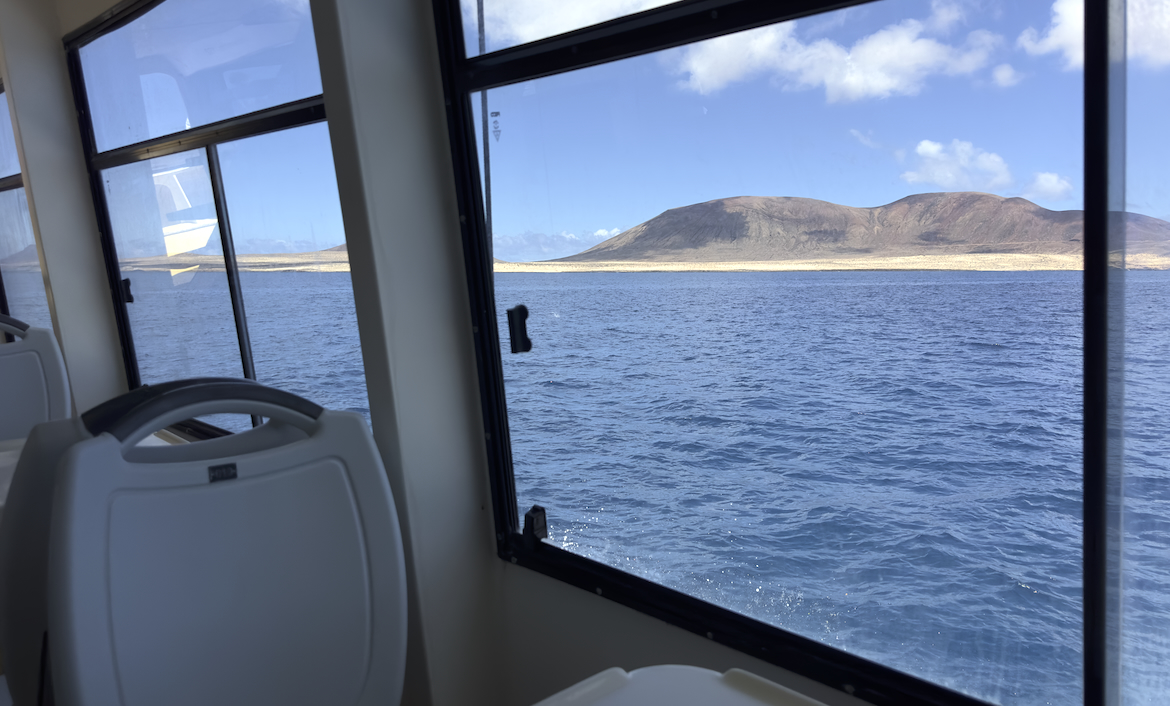
The fast ferry takes just 25 minutes to cross El Río (The River), the stretch of calm, cerulean water bridging the two islands. The ferry is clean and modern with toilets, a refreshment area, and both on-deck and shaded seating below – still with great views. That said, it’s worth slathering on the sunscreen to enjoy the incredible outside views; from the deck, you can truly experience the sheer scale of the cliffs as La Graciosa’s whitewashed main hub of Caleta del Sebo comes into view.
Caleta de Sebo
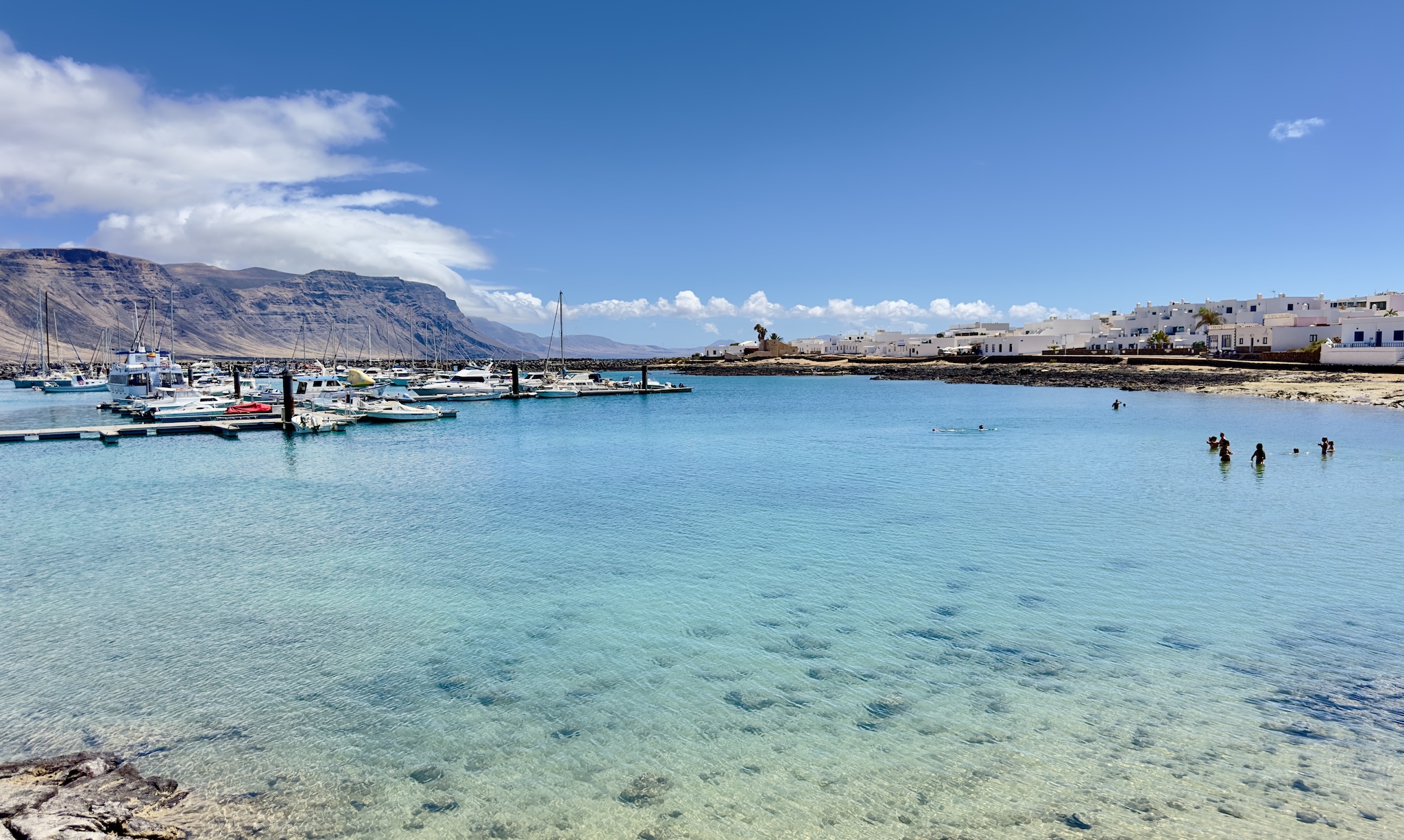
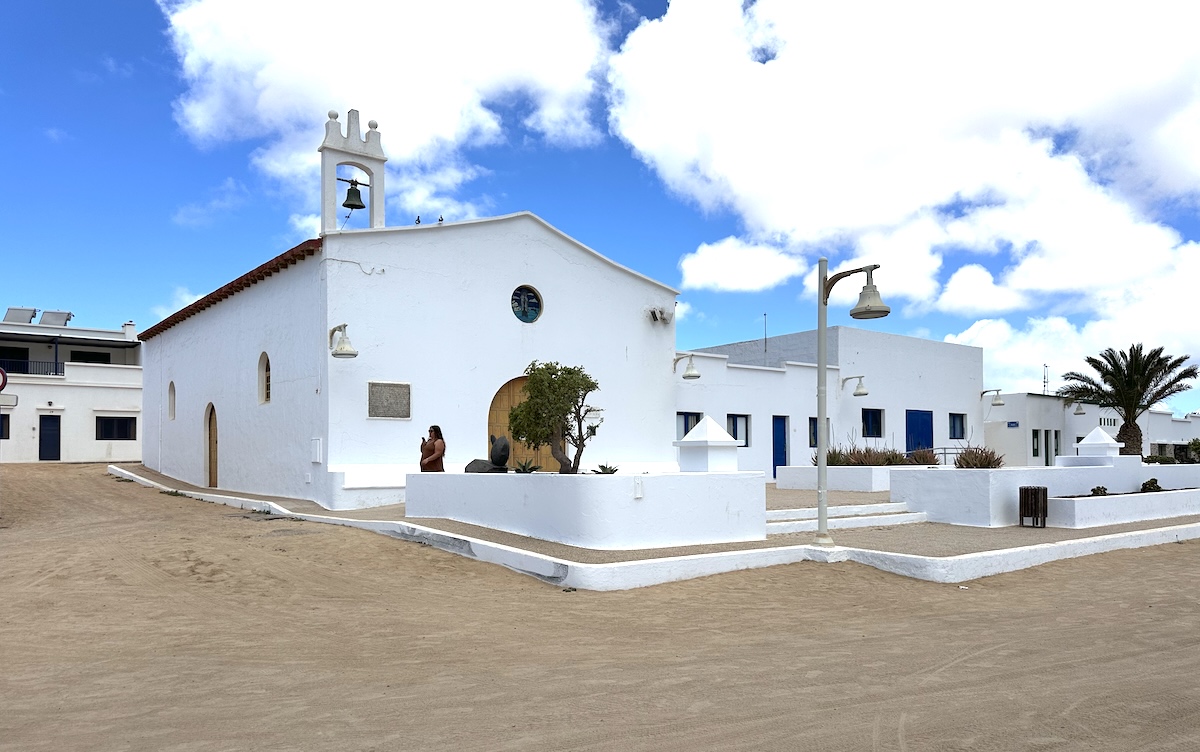
Less than 30 minutes later, you again feel like you’re in a different world. The low-slung settlement has no proper roads; it’s just rows of whitewashed houses, plus the local school and church, rising from soft, golden sands. It feels like a proper beach island escape, especially being a protected natural park.
In Caleta de Sebo, there’s a small, shallow swimming bay and beach and plenty of restaurants (the little bakery just before reaching the beach is good for a quick takeaway boccadillo). So even if you don’t want to stray further, you can enjoy an afternoon here soaking up La Graciosa’s vibe. However, you’d be missing out on the island’s best beaches.
Options for Exploring La Graciosa
There are three main ways to get around the island: on foot, by bike rental, or by jeep, either on a tour or as a jeep taxi.
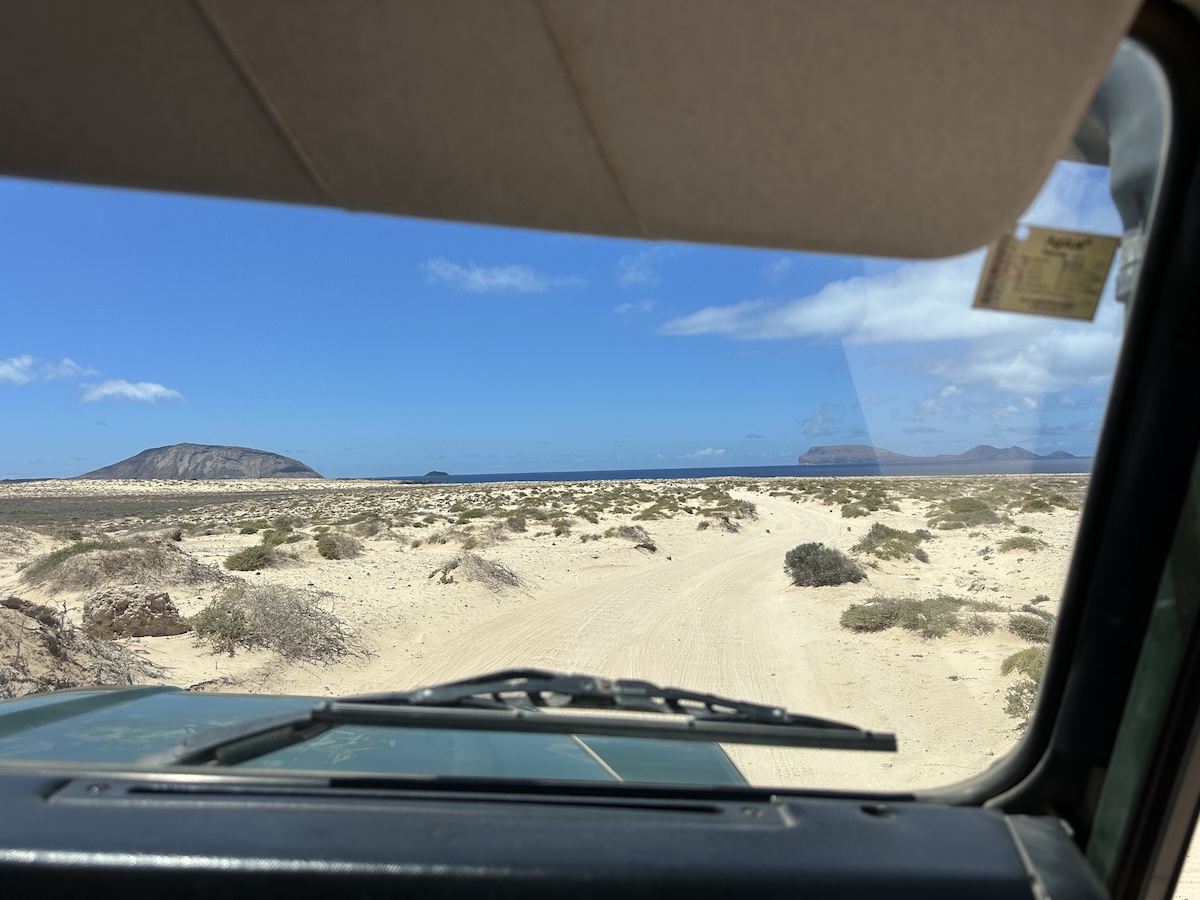
The “roads”, which are mainly compressed sand and rock, are easy to navigate and follow. Staying on them, no matter how you’re getting around, helps protect the landscape and dunes, which is particularly important for some nesting sites.
When I visited in June, I decided to abandon my cycling plans as it was too hot to pedal and booked a jeep tour of the northern part of the island (around two hours; a tour that included an extra beach in the south was three hours). I booked it online just before boarding the ferry, but when I arrived, there were still guides renting bikes and selling both jeep safaris and jeep taxi services – handy if you want to spend longer in one place – so I likely didn’t need to panic book.
Northern La Graciosa’s Highlights
The jeep tour I took gave a good introduction to the island and some of Spain’s hidden gems. It was very much appreciated, given the heat. That said, if I were to go back again, I’d work out a way to spend more time at the final stop: Las Conchas Beach.
First, we visited Pedro Barba, a cute cluster of holiday homes draped in bougainvillaea. There was a small sandy beach and gorgeous shallow bay, flanked by black volcanic rock, all looking back across Lanzarote’s sheer cliffs.
Next up, we headed to Playa Lambra. By now, the landscape was all rolling dunes and endless sand. Soon after, we stopped at Arcos de los Caletones, a popular photo stop of jet black lava arching over the tide rushing in and out below.
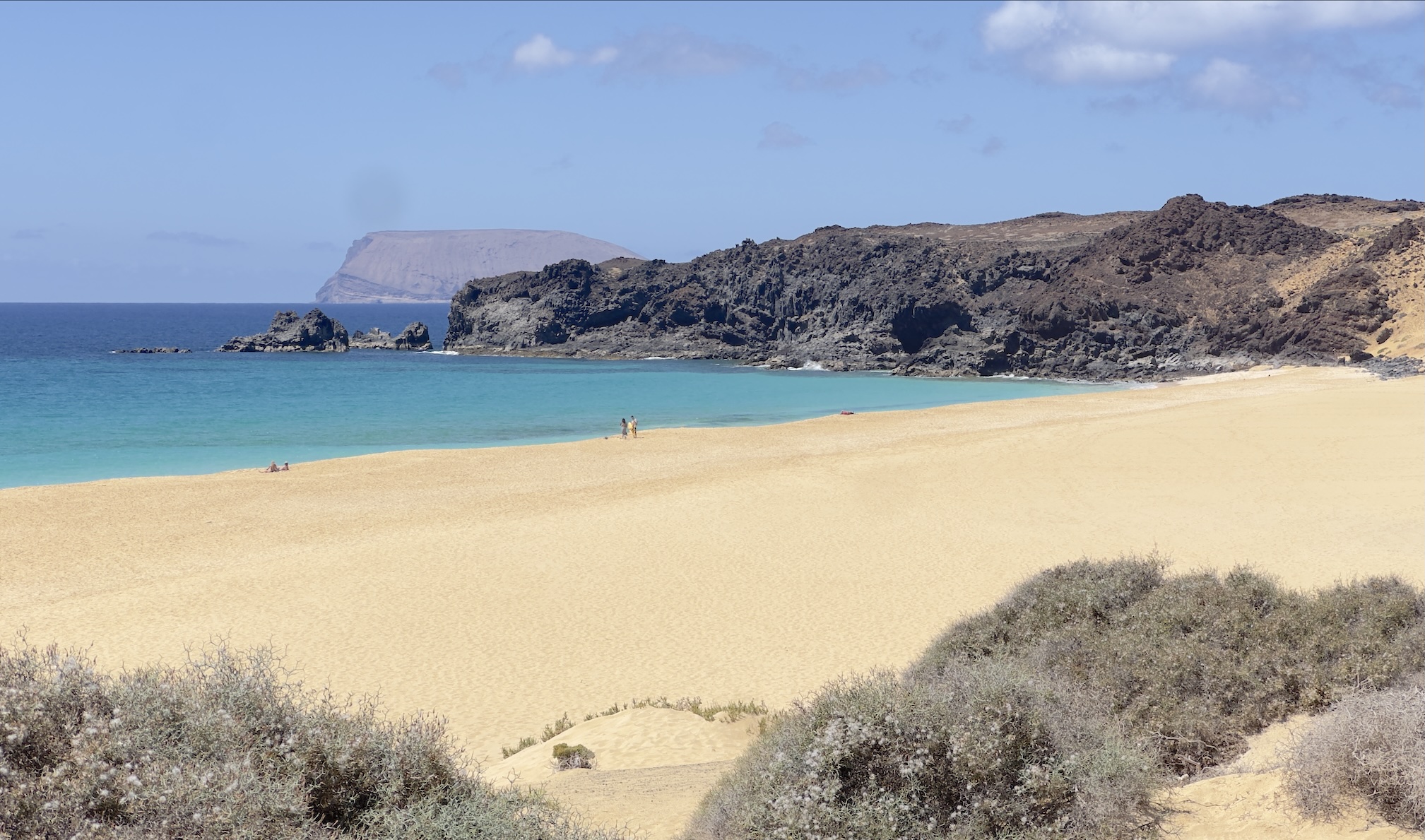
Saving the best for last, we arrived at Playa de las Conchas. It’s no lie when I say this is one of the most beautiful Spanish beaches I’ve ever seen. The volcanic Montaña Bermeja looms behind it; the water was all those shades of cyan and turquoise, and the vast expanse of powdery, light-croissant sands was paradisiacal. I instantly understood why the flexible ferry tickets were so important.
I could have happily lingered for a few days in La Graciosa. A good book, long swims, and fresh seafood here would make it a Canary Island holiday heaven. But even if you only have time for a day trip to northern Lanzarote and La Graciosa, don’t be put off: it’s both easy and exceptionally pretty.


Leave a Reply
Want to join the discussion?Feel free to contribute!