
First-Time Guide to Oman: Top Experiences & Planning Tips
This website uses affiliate links which may earn a commission at no additional cost to you. As an Amazon Associate I earn from qualifying purchases.
Updated: 29th July 2026

If there’s one word to summarise Oman, it’s hospitality. Kindness to strangers knows no bounds in the Sultanate. Picnics proffered on mountain tops, dates dolled out at whim, tea poured by Bedouin women in the desert, and jovial conversations with taxi drivers (as part of the Omanisation policy, only Omani nationals can be drivers, which arguably leads to more proud, local advice and insights).
But beyond the hospitality – the level of which I haven’t ever experienced in 75-odd other countries – there’s also a breathtaking and often bewildering backdrop of landscapes and heritage at every turn. Saw-toothed ridges. Biofluorescent speckled coastlines. Swathes of shifting sands crossed by dromedary camels. Sinkholes and swimming wadis so clear that they make your heart sing. Yes, the two weeks I spent road-tripping the nation on a photography assignment for Lonely Planet were phenomenal – all aided by liberal wild camping rules that make Oman a true adventure that doesn’t have to break the bank. Here’s how to plan your first perfect trip to Oman.
When to Visit Oman
Northern Oman – the mainland and the Musandam Peninsula – doesn’t have a distinct rainy season and is generally hot and dry year-round. This is especially true between May and September when temperatures peak, while light showers might occur in winter. However, Salalah and the south of the country experience a monsoon season, known as Khareef, between June and September. These heavy rains revitalise lush landscapes, creating an unexpected green southern scene in a nation usually considered to be arid.
While there isn’t really a bad time to travel to Oman, for most visitors, the best time to go is usually considered between September and November and March/April, when the weather is reliable and not unbearably hot. If experiencing Khareef is your priority, then high summer makes sense; however, many first-time travellers stick to the north, given the extra time and cost of taking the southern detour. I visited in early November and found the climate perfect, both for camping (which required a decent, warm sleeping bag) and outdoor activities.
Where to Stay in Oman
One of my favourite things about travelling in Oman is that pitching a tent on public land is legal. Camping is very much a pastime here, and you’re more likely to encounter Omani city dwellers enjoying a weekend wildamping than you are fellow tourists. Of course, in major cities such as Muscat, this isn’t really an option – although we did accidentally end up setting up camp in a Nizwa car park in the dead of night – but in the desert, along the coast (pay attention to avoid turtle nesting areas), and elsewhere, it’s no problem at all.
More than just being an affordable option, it’s actually what made the trip for me. Marvelling at the Milky Way in the Wahiba Sands, being awoken by intensely staring goat-eyes in Jebel Shams, and watching the ocean bathed in gold at sunrise were absolute highlights. So, pack your camping gear. We all brought individual, affordable tents – the sometimes rough terrain, sand and the like meant that larger ones could be hard to pitch, and high-end equipment might be damaged – and spent the majority of our trip calling them home.
Beyond that, we had a guesthouse stay in an inland, mountainous town (some of these you’ll stumble upon rather than find online), and then bookended the trip with hotel stays at Levatio Suites Muscat (it’s a Radisson property, but fairly priced) and in Seeb. There’s also plenty of resorts if that’s more your vibe.
Getting Around Oman
Public transport in Oman (Mwasalat is the main company) is mainly limited to urban areas and some intercity routes. It can help bring you between cities, but you’ll miss so much of the nature that makes Oman so alluring. As such, hire a car, join a guided tour or use taxis – either via an app, like OTaxi (there’s no Uber) or the traditional cabs (agree prices before setting off).
In my opinion, the only way to do Oman justice is on a road trip. Whilst I have read some accounts of people travelling Oman with a 2WD and saying it was no problem, the roads we went down were certainly not doable without a 4WD, and even then we managed to blow a tyre (easily replaceable in many shops). If you’re planning to drive into the desert – and if so, do so with caution, good navigational options and at your own risk – or on rural mountain roads, booking with a local 4WD company with offices on the ground will provide more reassurance. We hired our four-wheel with Mark Tours; they also offer a variety of tours if you can’t, or would prefer not to, drive.

My Favourite Oman Experiences
Swim at Sinkholes, Wadis and Wild Beaches
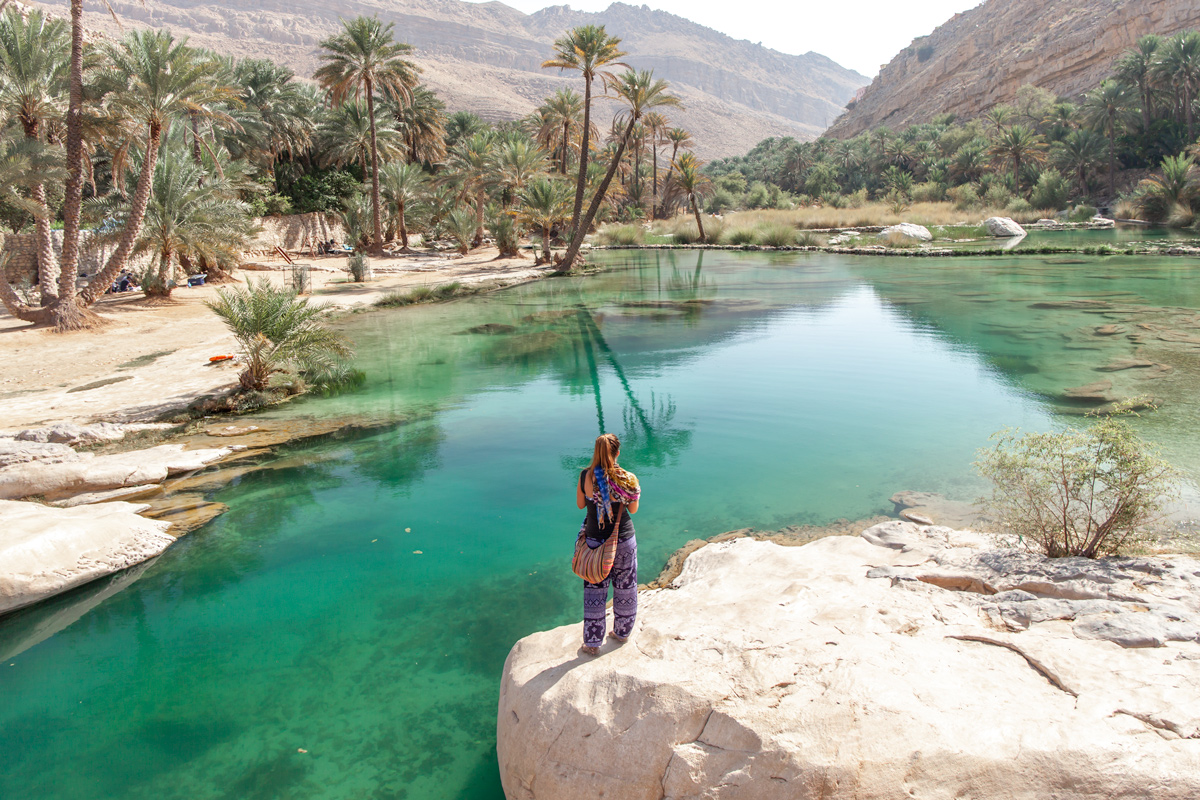
Water will soon become your best friend while travelling around arid Oman, and thankfully, there are swimming spots aplenty. Most magnificent at the Wadis. Meaning valley in Arabic, these rock-carved pools of all shapes and sizes, often fringed with palms and packed with local families taking a dip or enjoying a picnic, are welcome relief on a blistering day. Two of my favourites were the clear channels at Wadi Shab, accessed by a little boat from the main road, and spectacular Wadi Bani Khalid.
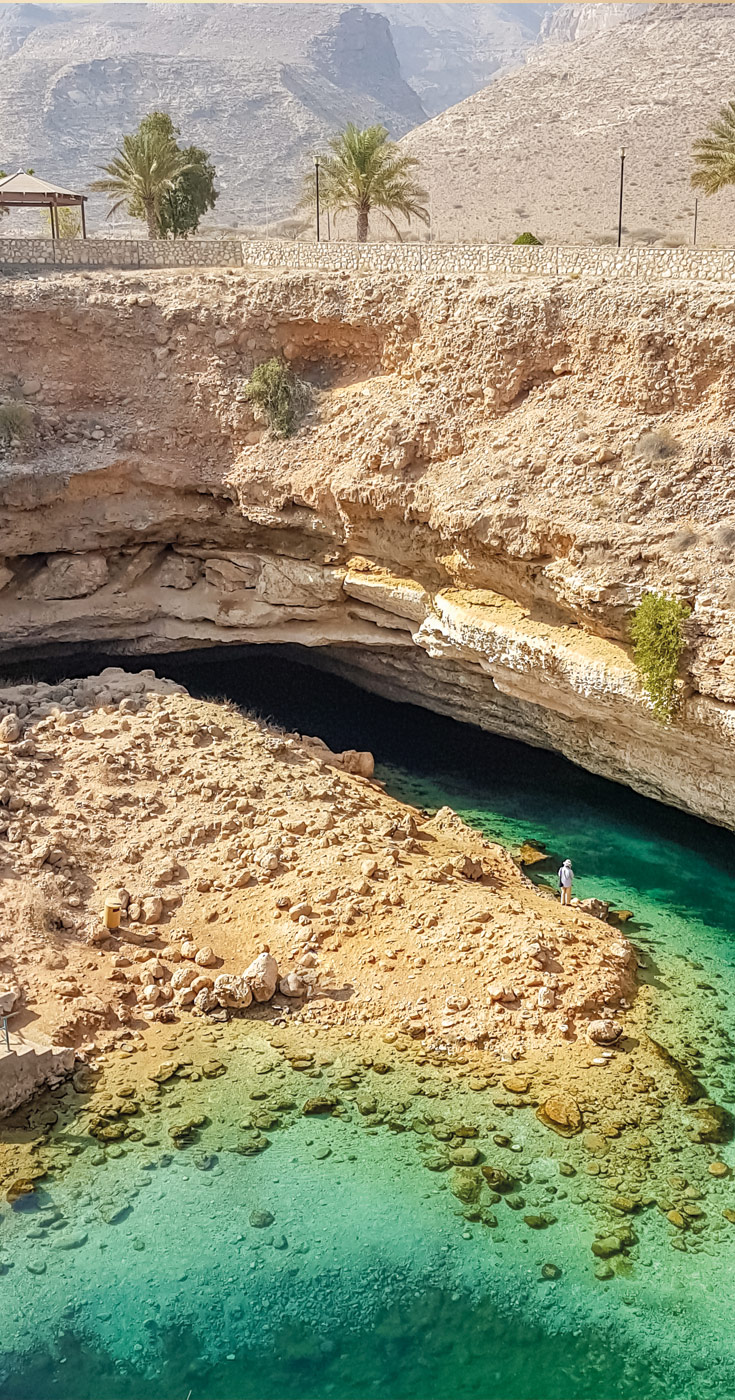
Another popular spot that should feature on any Oman itinerary is Bimmah Sinkhole. The water in this natural limestone depression looks almost photoshopped. A staircase leads down for a quick cool-off. Similarly, the Oman coastline is a wild, rugged and largely footprint-free treat. On one particularly memorable day, we sighted giant sea turtles burying their eggs on Ras Al Jinz beach and later, fluorescent plankton as we strolled elsewhere in the shallows.
Soak up Nizwa Fort’s History
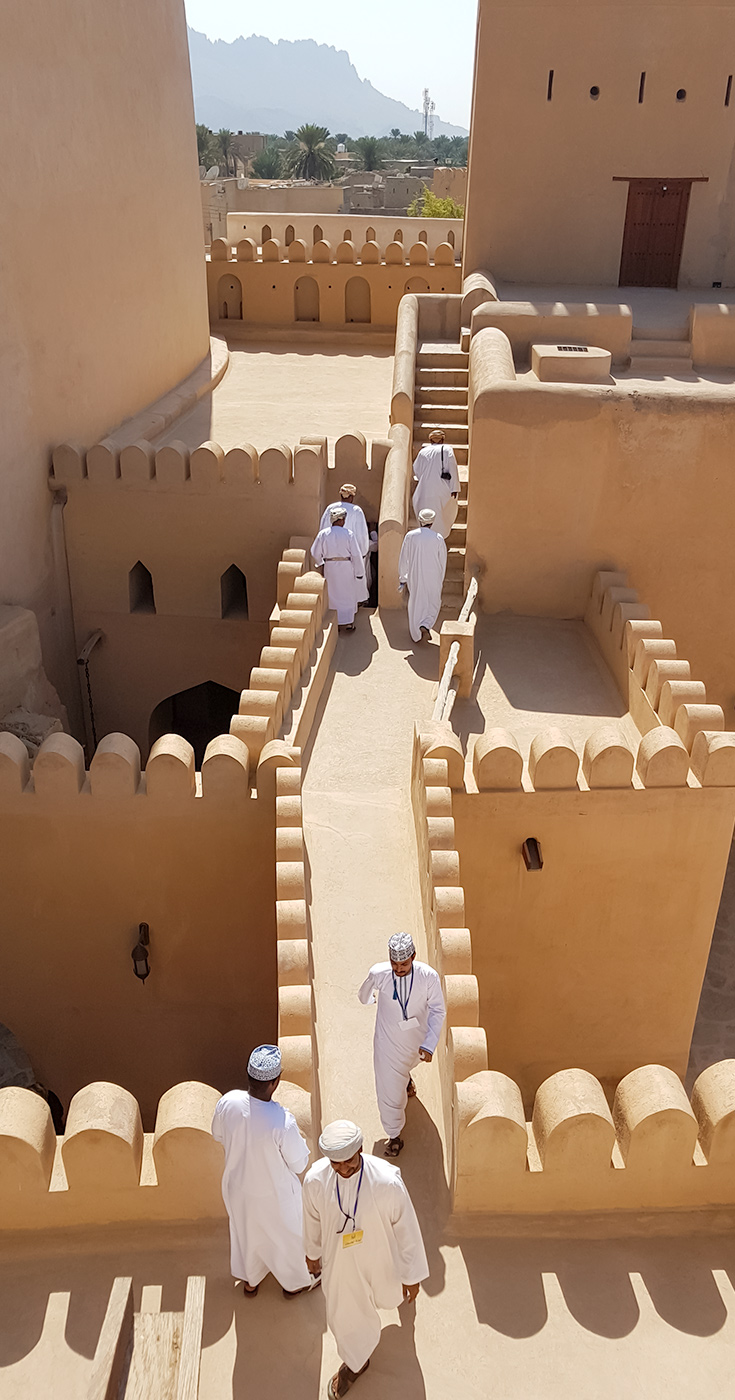
Inland, the ancient city of Nizwa wows. The centuries-old Nizwa Fort, constructed from local stone and clay and packed-earth mortar, is the centrepiece and well worthy of the visit alone. There are often special events held here. We were especially lucky to visit during an annual celebration where traditional outfits, reenactments and musical activities had taken over the fort’s interior.
Nizwa itself, surrounded by palms, with its souk’s pottery shops, silversmiths and sellers hawking delicious dates and halva, is a little touristy but still a real Oman highlight. Afterwards, we drove to Ibra for a less-visited contrast, and peacefully poked around the old town’s underrated ruins and swooned over the colourful wooden doors.
Wildcamp in the Wahiba Sands
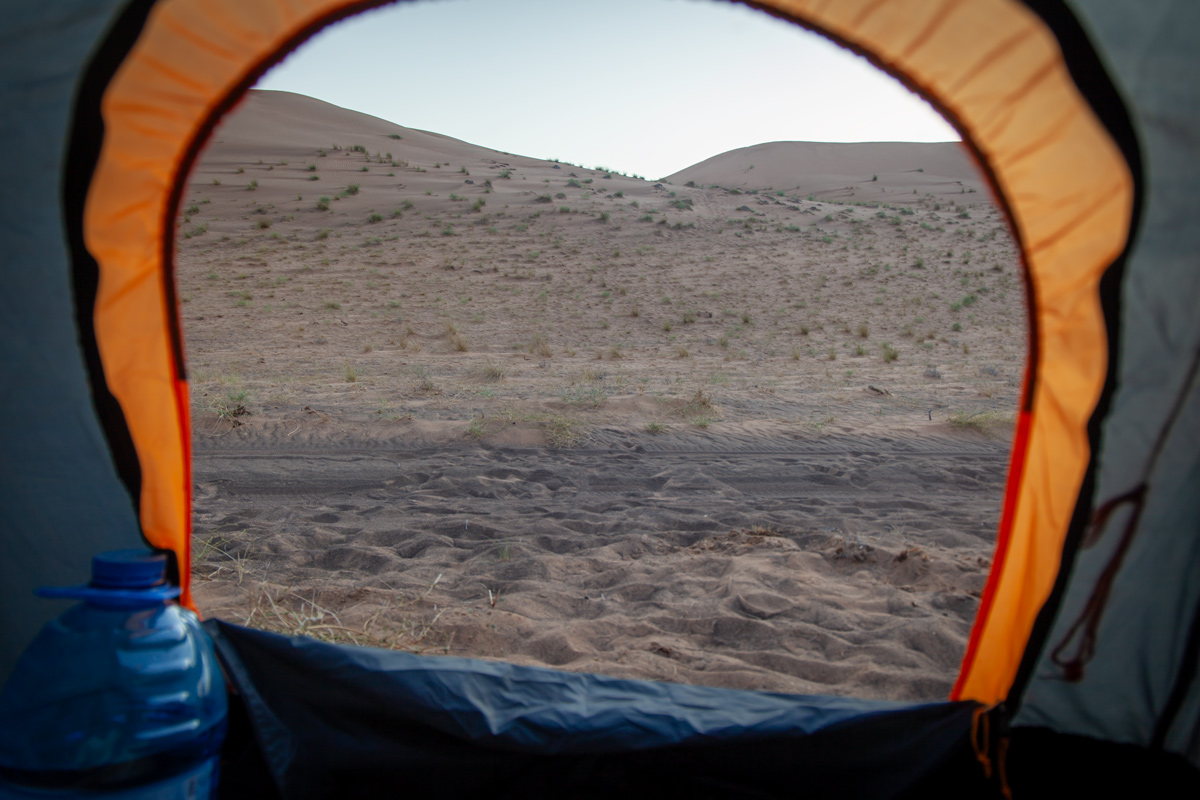
Arriving in the Wahiba Sands, also known as the Sharqiya Sands, I was filled with suspense. I was so excited to spend the night under the stars. Soon after driving onto the sands, we were greeted by sauntering wild camels.
Settling on a place to camp, we pitched up all alone until a few hours later, when a beat-up, yet super-charged four-wheeler pounded over the dunes toward us. A group of Bedouin women jumped from the front seats and gestured with hand signals, checking to make sure we hadn’t broken down. With smiles and laughter, they offered us tea before leaving us to relish the crimson sun plunging behind the distant dunes as the silence of the night enveloped us. It was one of the most unforgettable and secluded destinations I’ve ever slept.
Gawp at the “Grand Canyon of Arabia”
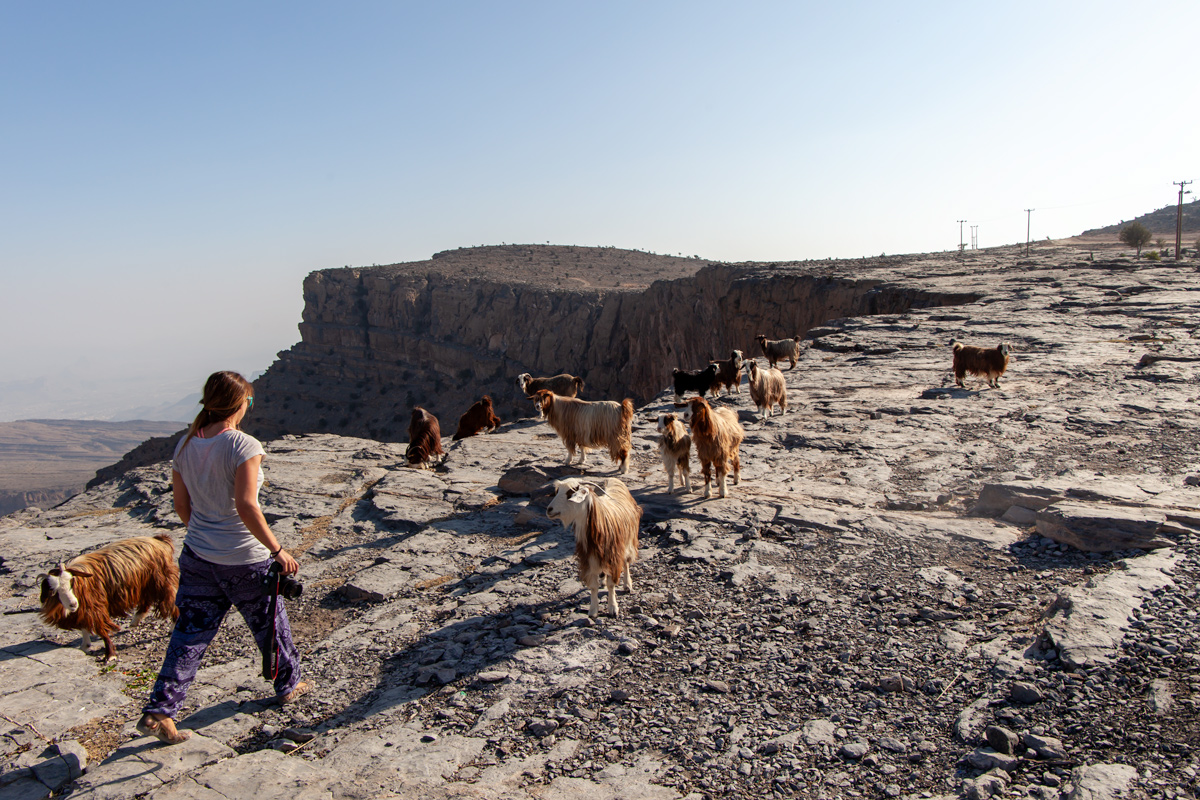
Jebel Shams is the highest peak in Oman. Set in the Hajar mountain range, the lofty point overlooks a vast wadi, often referred to as “The Grand Canyon of Arabia” because of its grandeur. With death-defying trotting goats and endless panoramas, it’s a fine reward for the sometimes hair-raising mountain drive (do yourself a favour, and take detours en route to the small mountain villages where football pitches are folded between peaks and water refills are offered by wrinkled hands).
Here, you’ll meet Omanis hiking, city workers on weekend camping treats – a welcoming group of government workers called us over for coffee, dates and slices of watermelon soon after we’d pitched up – and a lot of curious and food-seeking goats. Striking scenes aside, the ridge’s trails and routes into the wadi can fill a day of adventure.
Marvel at the Musandam Peninsula
Dubbed the “Norway of Arabia” due to its fjord-like setting, cerulean waters and year-round pods of playful dolphins, Oman’s Musandam Peninsula is deserving of a day or two in addition to your main Oman itinerary. I say this because the peninsula is separated from the main part of the country by the UAE, which requires a bit more planning and budget. Most rental car companies forbid cars crossing over, meaning you’ll need to take a succession of buses, or a domestic Oman Air flight between the two.
Take in Muscat’s Sultan Qaboos Grand Mosque and Corniche
Oman’s capital city, Muscat, is a maze of laneways and building works, though thankfully, without powering towards the total high-rise and culture-sapping designs of some of its nearby nations. That’s not to say it’s not modern or cosmopolitan. Traditional stores sit alongside elaborate malls, and walking around, it feels quite diverse and international.
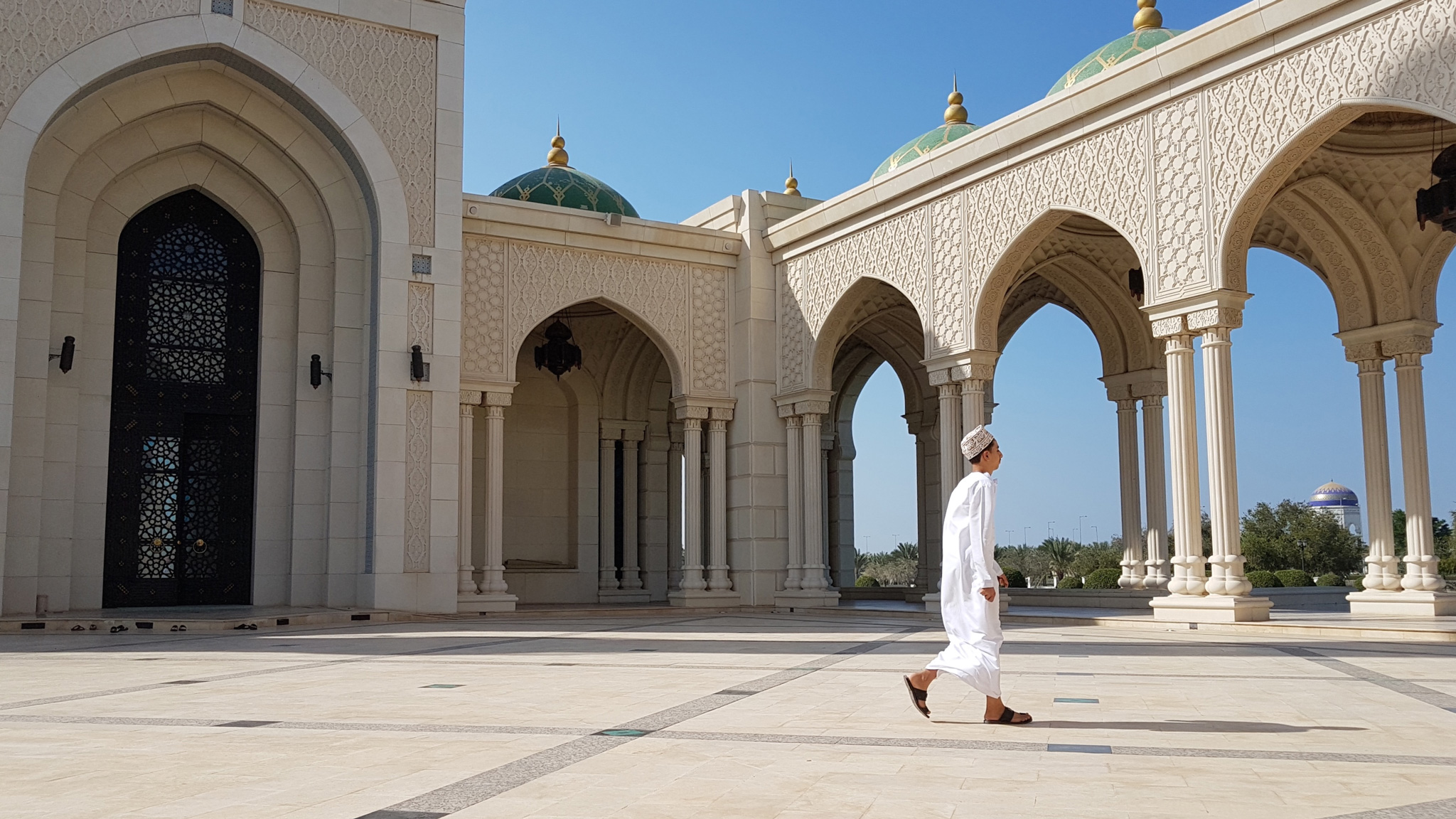
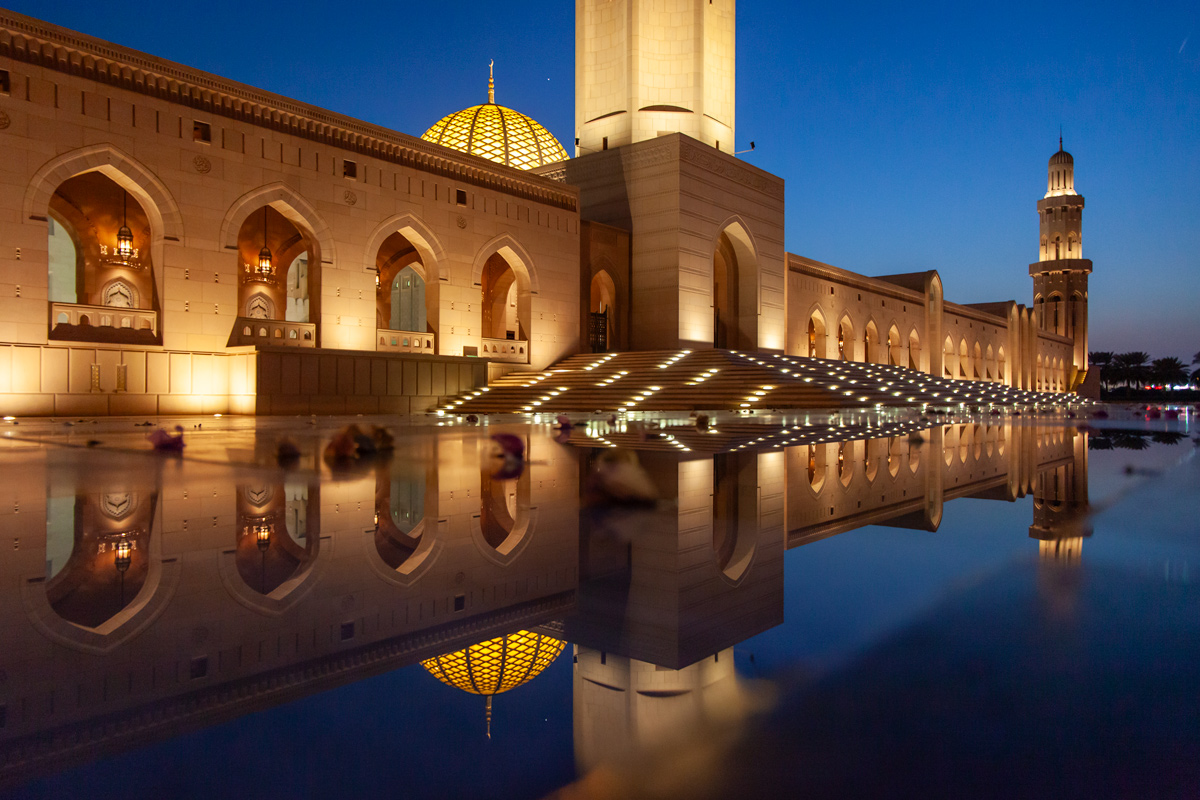
The impressive architecture around the city is no more evident than at the Sultan Qaboos Grand Mosque. Constructed in 2001, the vast 20,000-worshipper-accommodating mosque is a thing of modern beauty, and lays claim to the second-largest hand-woven Persian carpet in the world – though it still pales in comparison to Abu Dhabi’s Grand Mosque. Its doors open for all who wish to visit, including women. Fill the rest of your time in the city bartering over fitted hats and incense at the souks and a waterfront stroll along the Muttrah Corniche, before settling in for coffee and dates on a cafe terrace at sunset.
What to Pack for Oman
Be sure to pack plenty of sunscreen; the weather can be relentless, and I found it hard to come by in most smaller destinations. Multiple swimming costumes are also a good idea, as while they dry quickly, you might want a different option for different environments, such as the sea and sinkholes; at a hotel resort – or, at a push, a deserted beach – a swimming costume isn’t a problem, but at busy wadis and most public swimming locations, wearing a T-shirt and shorts is expected.
Similarly, longer shorts, slip-on shoes, shoulder-covering clothes and a shawl are a must when visiting religious buildings. That said, in day-to-day life, especially in Muscat, I found the general dress and choice of outfits were far less conservative than in other Middle Eastern countries. Head coverings are only required in religious buildings. Lastly, bring an International Driving Permit (IDP) – on short visits, police may be more relaxed about IDP requirements, but rental companies often aren’t.


Leave a Reply
Want to join the discussion?Feel free to contribute!